C++异常
异常
错误处理
如果出现本身不能处理的错误,那么发生错误的代码和处理错误的代码不在同一处。常用的错误处理的方式
- 终止程序
- 返回一个表示错误的值
- 默默的返回
- 设置全局出错变量
- 抛出异常
class Stack {
    int size;
    int capacity;
public:
    void push(int x) {
        if(size >= capacity) {
            // 出错怎么办?
        }
    }
    int pop() {
        if(size <= 0) {
            // 出错怎么办?
        }
    }
};

int main() {
    Stack s;
    s.pop();    // 万一出错怎么办
    s.push(10); // 万一出错怎么办?
}
异常处理方式
class Overflow {
};

class Stack {
    int size;
    int capacity;
public:
    void push(int x) {
        if(size >= capacity) {
            Overflow e;
            throw e;
        }
    }
};

int main() {
    Stack s;
    try {
        s.push(10);
    }
    catch(Overflow e) {
        cout << "Overflow" << endl;
    }
}
处理多种异常
class Overflow {
};

class Underflow{
};

class Stack {
    int size;
    int capacity;
public:
    void push(int x) {
        if(size >= capacity) {
            Overflow e;
            throw e;
        }
    }
    void pop() {
        if(size <=0)
            throw Underflow();
    }
};

int main() {
    Stack s;
    try {
        s.pop();
        s.push(10);
    }
    catch(Overflow e) {
        cout << "Overflow" << endl;
    }
    catch(Underflow e) {
        cout << "Underflow" << endl;
    }
}
给异常添加派生结构:
class StackError {
};

class Overflow : public StackError {
};

class Underflow : public StackError{
};

class Stack {
    int size;
    int capacity;
public:
    void push(int x) {
        if(size >= capacity) {
            Overflow e;
            throw e;
        }
    }
    void pop() {
        if(size <=0)
            throw Underflow();
    }
};

int main() {
    Stack s;
    try {
        s.pop();
        s.push(10);
    }
    catch(Overflow e) {
        cout << "Overflow" << endl;
    }
    catch(Underflow e) {
        cout << "Underflow" << endl;
    }
    catch(StackError e) {
        cout << "StackError" << endl;
    }
}
捕捉所有未知异常
class StackError {
};

class Overflow : public StackError {
};

class Underflow : public StackError{
};

class Stack {
    int size;
    int capacity;
public:
    void push(int x) {
        if(size >= capacity) {
            throw "Error";
        }
    }
    void pop() {
        if(size <=0)
            throw Underflow();
    }
};

int main() {
    Stack s;
    try {
        s.pop();
        s.push(10);
    }
    catch(Overflow e) {
        cout << "Overflow" << endl;
    }
    catch(Underflow e) {
        cout << "Underflow" << endl;
    }
    catch(StackError e) {
        cout << "StackError" << endl;
    }
    catch(...) {
        cout << "Unknown Error" << endl;
    }
}
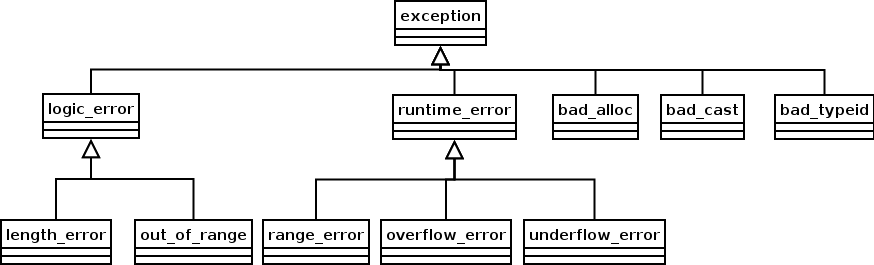
标准异常体系
在头文件<exception>中定义了基类exception。
dynamic_cast转换引用出错:bad_cast
new分配内存出错:bad_alloc
at访问成员:out_of_range